 By admin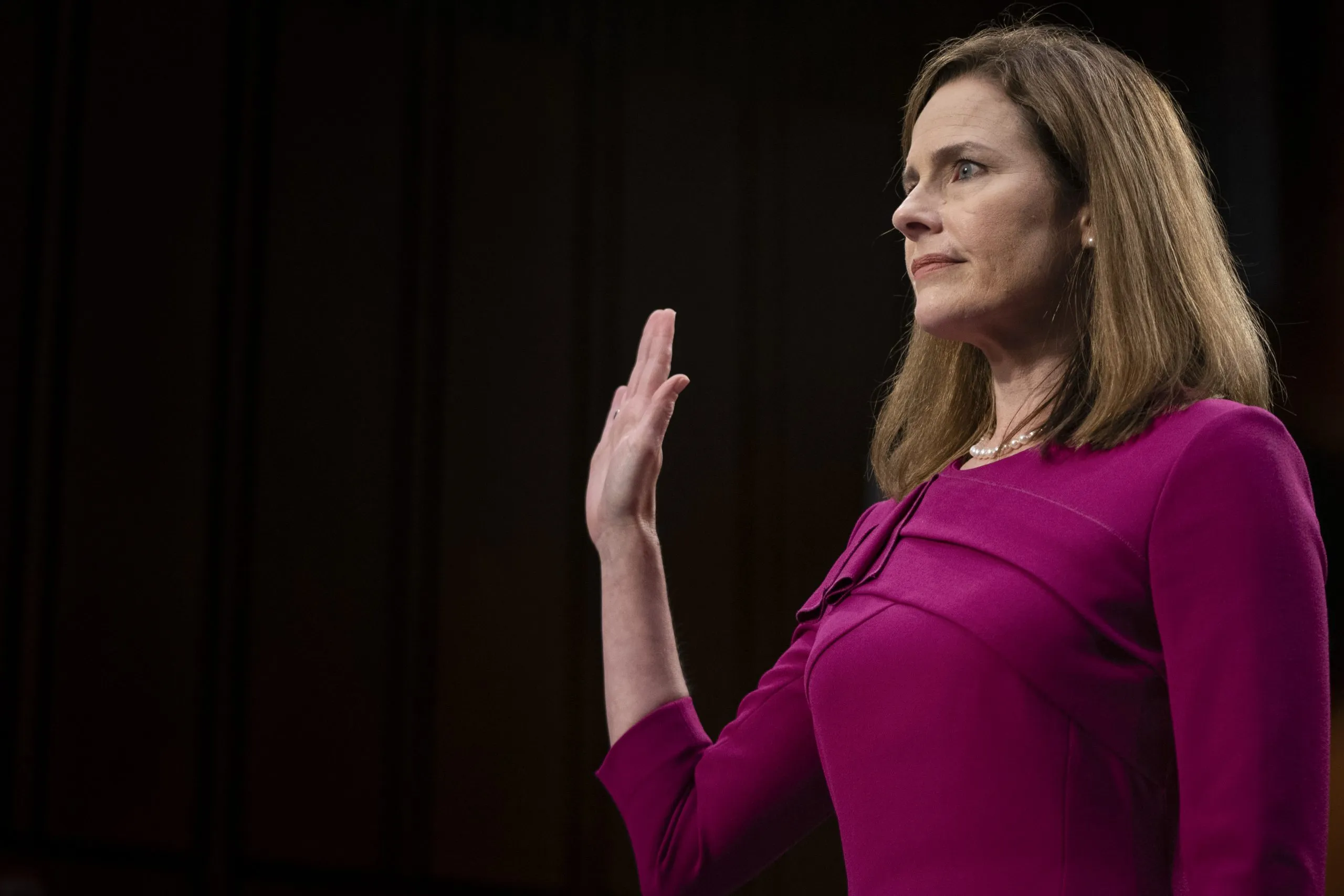
The Republican National Committee (RNC) had hoped that its lawsuit challenging Mississippi’s mail-in balloting rule would end with a bang; instead, it fizzled into a whimper. But the yesterday—especially the dissent from four justices—still raises serious concerns about the Court’s fidelity to voters and their rights.
Read more The Strait of Hormuz is Iran’s Nuclear Weapon
Here’s what happened: The RNC challenged the State of Mississippi’s rule allowing it to count ballots postmarked by Election Day, even if it receives them up to five days later. That is, a voter could put their ballot in the mail on Election Day, and it will count so long as the state receives it within five days. Fourteen states, the District of Columbia, and several territories have a similar postmark deadline. And 30 states plus D.C. accept later-arriving ballots cast by military and overseas voters. The RNC argued that federal law preempts these state rules because the statute’s language specifically sets Election Day as the “Tuesday next after the 1st Monday in November,” which it said means the “election” requires that all ballots be cast and received by that date. It’s a tortured statutory interpretation that twists the meaning of the word “election” in federal law to suggest that casting and submitting a ballot before Election Day is not enough.
Despite over 150 years of established practice where states determine their absentee balloting rules, the Fifth Circuit agreed with this miserly interpretation, striking down Mississippi’s law. That court found that “[t]ext, precedent, and historical practice confirm this ‘day for the election’ is the day by which ballots must be both cast by voters and received by state officials.”
Justice Amy Coney Barrett, in a 5-4 decision, this view. “The defining element of an ‘election’ . . . has always been the electorate’s choice of candidate.” That choice happens when the voter casts and submits their ballot. That ruling is consistent with historical practice, precedent, and common sense.
The decision was good for voters. It maintained a time-honored precedent of allowing states to accept ballots that arrive after Election Day, so long as they are postmarked on time. It allows voters in states that permit later-arriving ballots to wait until Election Day to make their choices without worrying about how many days it might take the U.S. Postal Service to deliver their ballots. And it avoids the chaos in election administration that a contrary ruling would have created.
Yet the specter of voter fraud loomed large over both the majority and dissent, offering a concerning look at the justices’ views going forward in other cases. Writing for the majority, Justice Barrett rejected the RNC’s argument that allowing ballots to arrive after Election Day “may give rise to the appearance of fraud because election results may appear to flip after election day.”
Read more Women Aren’t “Under-babied.” They’re Under Threat.
Instead of affirming the security of our election system, however, Justice Barrett seemed to accept the premise that absentee ballots might lead to the appearance of fraud. She wrote, correctly, that “even under plaintiffs’ interpretation, last-minute flips are possible, because the election-day statutes set no deadline for counting ballots or certifying election results.” Yet there is no such thing as a last-minute “flip,” and speaking in terms of “flipping” the results during the election night count is improper. Leads may change as ballots are counted, but no results are “flipped” because they are not final until the state has counted all ballots and election officials have certified them. It’s the same as saying the result in a World Cup match is “flipped” by a last-minute goal; although one team might have had the lead, there is no winner until the final whistle blows.
Justice Samuel Alito, in dissent for himself and Justices Clarence Thomas, Neil Gorsuch, and Brett Kavanaugh (in part), took the myth of voter fraud much further. He wrote that “today’s decision leaves open opportunities for voter fraud that may further undermine Americans’ faith in the integrity of this country’s elections.”
But it’s Justice Alito’s of the myth of voter fraud, without evidence, that should raise citizens’ alarms, not a state that sensibly provides a few days for ballots to arrive if they are mailed on election day. He tried to make his point with citations to sources discussing voter fraud, but none speak to present-day election administration: a 2005 report from the on Federal Election Reform noting that absentee balloting is “the largest source of potential voter fraud”; a 2008 decision on voter ID laws; and a 2003 book (fittingly titled The Myth of Voter Fraud). Justice Alito did not acknowledge that these sources are around two decades old. He also did not admit that voter fraud is extremely rare, even if absentee balloting might be a primary source of that miniscule fraud. In a footnote, he cited a few examples of absentee-balloting fraud without acknowledging that the system worked and that these schemes were uncovered. Justice Alito also failed to respond adequately to Justice Barrett’s point that a ballot receipt deadline is unrelated to any fraud, calling her point “nonresponsive” and “unremarkable” before falling back on the trope that fraud theoretically could occur.
The bottom line is this: Voter fraud is extremely rare, and election officials have implemented numerous measures to deter and detect it. Even the conservative Heritage Foundation’s election fraud database has exceedingly few entries compared to the total ballots cast in American elections. Supreme Court justices, who should rely on actual evidence, act improperly when they embellish the concerns of fraud based on conjecture. Their exaggerations—not easier voting rules—are what can undermine people’s faith in democracy.
So, while the Mississippi decision was good for voters, it was concerning for the underlying message about voter fraud and the leeway the Court may give to states to combat it. Of course, any voter fraud is bad, and we should have integrity measures to combat it—as we already do. But the justices should not elevate the boogeyman of voter fraud to justify restrictive voting rules when no real evidence of such foul play exists.
Read more The President’s Birthright Citizenship Order is Not Just Unconstitutional. It’s Crazy