 By admin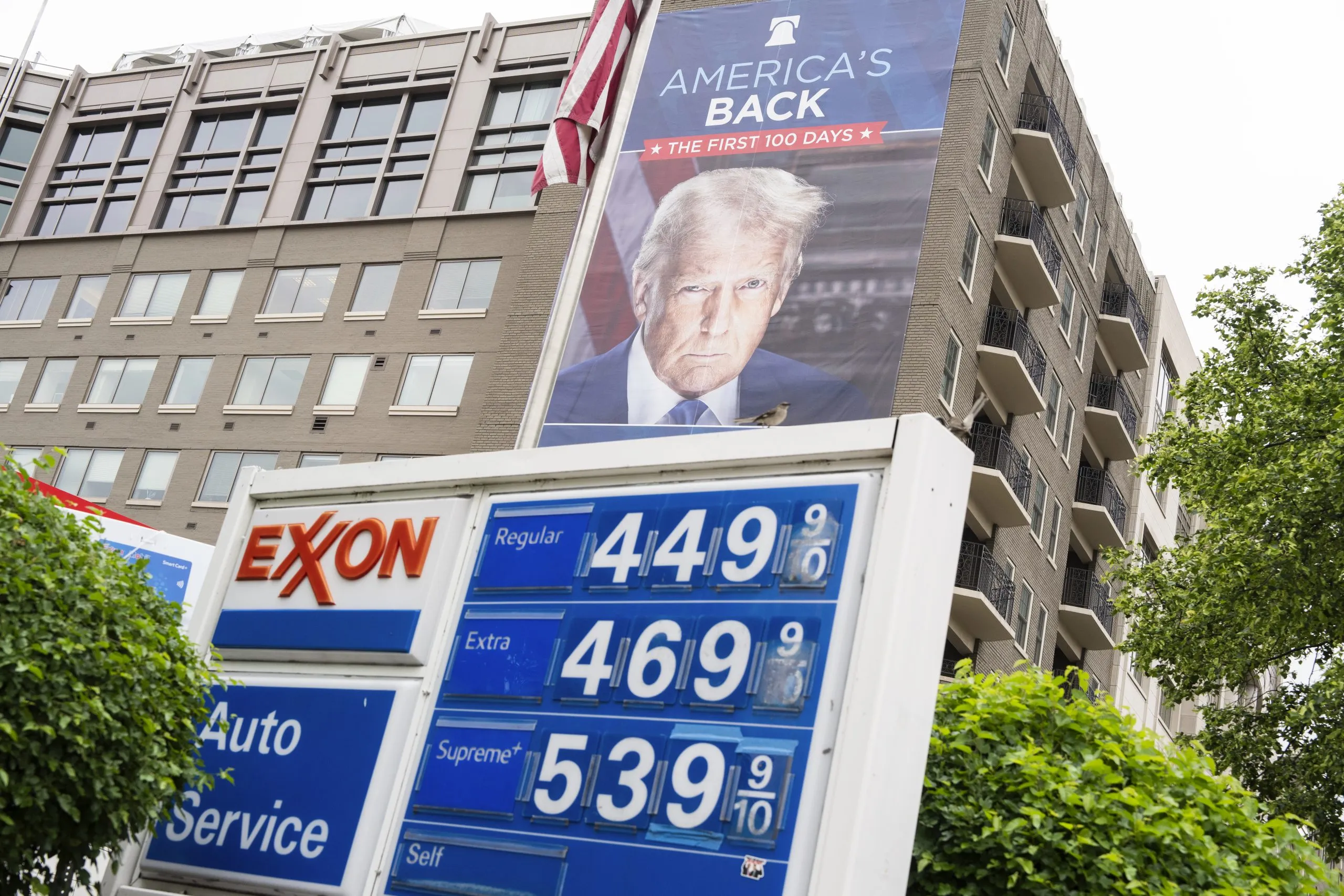
Big Oil is having a great year. After Trump promised to make fossil fuel executives’ dreams into reality if the industry funded his reelection, they responded by plowing $120 million of trackable campaign contributions into electing Republicans. That investment has generated enormous returns, though perhaps not in the way the industry expected. Instead of large-scale permitting reform, we’ve had the takeover of Venezuelan oil and a misadventure in Iran that—while inflicting a horrendous toll on Iranian civilians, causing punishing fuel shortages in the global south, fueling high gas prices and inflation, and damaging America’s global standing—has been great for business, even after accounting for the billions of dollars oil companies have lost on bombed infrastructure and lost sales.
Read more Call Them ‘Common Sense Democrats’
Recent days have seen oil companies report blowout profits on earnings call after earnings call for the second quarter of 2026—the first quarter to fully reflect the impact of Iran’s closure of the Strait of Hormuz. Chevron posted its highest quarterly profits ever. BP’s profits more than doubled year-over-year. Exxon also doubled its year-over-year earnings, despite losing 10 percent of its upstream production. Those three firms alone raked in average daily oil profits of over $400 million.
It isn’t surprising that the closure of the strait would benefit fossil fuel companies less reliant on the output of Middle Eastern oilfields. One particularly interesting dynamic, however, is that windfall profits are coming not just from firms’ “upstream” crude extraction segments, but also their “downstream” refining operations—which should, in theory, see thinner margins when crude prices (their input costs) are high.
Quite the opposite, refining margins have boomed over recent months. To take one example, BP’s refining margin was $12 per barrel last year. In the second quarter of this year, it was $30 per barrel, and it has reached $42 per barrel in the third.
We can observe this trend across the industry by looking at the crack spread, or the gap between prices of refined petroleum products and crude measured in dollars per barrel. From January until March of this year, the benchmark “3-2-1”spread, which measures the difference in price between three barrels of crude and outputs of two barrels of gasoline and one barrel of diesel, was fairly consistently between $25 and $30 a barrel. Since March, it has soared, reaching peaks as high as $72.22 per barrel. For comparison, the highest it got in 2022 following Russia’s invasion of Ukraine was $54.34 per barrel.
What this tells us is that the high prices Americans are currently paying for gasoline and other refined-oil products are not simply the natural and inevitable result of a commodity supply shock—of high crude prices being “passed through.” Indeed, prices for refined products have substantially outpaced the price of crude. The price of crude oil is up 28 percent from the start of the year, as of this writing. At the same time, the price of gasoline is up 51 percent. In other words, the refining segments of oil and gas companies are passing on increased input costs for the feedstock oil, along with a hefty markup.
So what gives? As economist Hal Singer predicted in this magazine back in March, high prices have much to do with the particular ways in which the Iran war and other recent geopolitical events have enhanced the market power of Western oil refiners.
Read more Congress Should Stop Russ Vought’s Latest Power Grab
The Iran war has not just choked off the supply of crude oil moving through the Strait of Hormuz: Iran has concentrated its retaliatory strikes on the oil and gas infrastructure underpinning the economies of U.S. allies in the Gulf, including refineries. This month, the commodity intelligence firm Kpler estimated that the war reduced Middle Eastern refinery output by 27 percent year-over-year. At the same time, Ukraine’s recent barrage on Russian refineries has been so devastatingly effective that it may transform Russia from one of the world’s biggest energy exporters to a net importer of fossil fuels. Between these two conflicts, nearly nine percent of global refining capacity is currently offline.
What this means is that refining capacity has become the decisive bottleneck restricting the supply of fuel—even as some nations have stabilized crude prices with releases from strategic reserves. As the executive director of the International Energy Agency, Faith Birol, said, “Refinery activity and product supplies have not picked up as much as crude deliveries, meaning that markets for refined oil products, including diesel and gasoline, are considerably tighter than those for crude.”
In the dream of perfectly competitive markets, fat refining margins would attract increased business entry, raising supply to meet demand. But new refining infrastructure is expensive and slow to build out. Meanwhile, American refineries have already picked up all the slack they can manage, running near full utilization all summer. ExxonMobil CEO Darren Woods has promised to “push as hard as we can to maximize production,” acknowledging that “these high margins lead to high product prices, which we also know has a significant impact on consumers.” But with the company already running at 97 percent utilization, this is a hollow promise. Indeed, the promise is ironic given that oil majors have shed U.S. refining capacity over recent decades in order to protect their profitability. The number of U.S. facilities has shrunk from 301 in 1982 to 130 this year; total refining capacity has declined by 1.2 million barrels per day since 2019.
The upshot is that high gas prices won’t simply return to normal after the Strait reopens. That won’t happen until the existing global refining capacity comes back online—and RBN Energy forecasts that refined product exports from the Middle East won’t return to normal until the end of 2027, given the extent of damage there, and that “Russian refinery operations will remain extremely challenged until hostilities cease.”
For policymakers, the takeaway should be clear: A “wait and see” approach is not an option. But that doesn’t mean there are no solutions. In the long run, renewables and electrification provide an opportunity to make the country less vulnerable to fossil fuel shocks. In particularly concentrated geographical markets like California, there are opportunities to lower prices through antitrust policy.
But the immediate policy fix is the simplest: Limit the profitability of gouging through excess markups. This can be done through simple statutory price caps or through windfall taxes, which the U.K. and E.U. imposed after 2022’s energy crisis and have been proposed by Rhode Island Senator Sheldon Whitehouse. President Trump’s recent admonition that oil companies are “making too much money” may even provide a bipartisan path forward.
Read more One Internal Pollster Saw the Primary Results Coming